 Bellingham Roofing
 Energy-Efficient Windows for South Hill: A Hillside Neighborhood That Wears Its Weather
South Hill sits on the slope above downtown Bellingham, with a mix of older homes and newer construction taking in views across Bellingham Bay and the Salish Sea. That elevation and bay exposure are part of what make the neighborhood desirable, but they're also exactly what puts extra stress on a home's windows. Higher, more open sites catch wind that doesn't get broken up the way it would on a sheltered inland lot, and that wind carries salt-laden marine air and driving rain straight at the glass and frames on a south- or west-facing elevation. Add in Whatcom County's long moss and mildew season, and South Hill's windows are working harder than windows on a typical inland Washington home.
"Energy-efficient" gets used as a marketing word a lot, but for a South Hill home it's a practical description of what a window actually needs to do: hold a tight seal against wind-driven rain, resist the corrosion that marine air causes on lower-grade hardware over years, and keep conditioned air inside instead of leaking out through a frame that's lost its seal. We handle window replacement and repair across this stretch of Whatcom County, and on South Hill in particular we pay close attention to which elevation of the house is taking the weather, because that changes what the window and its installation need to hold up to.
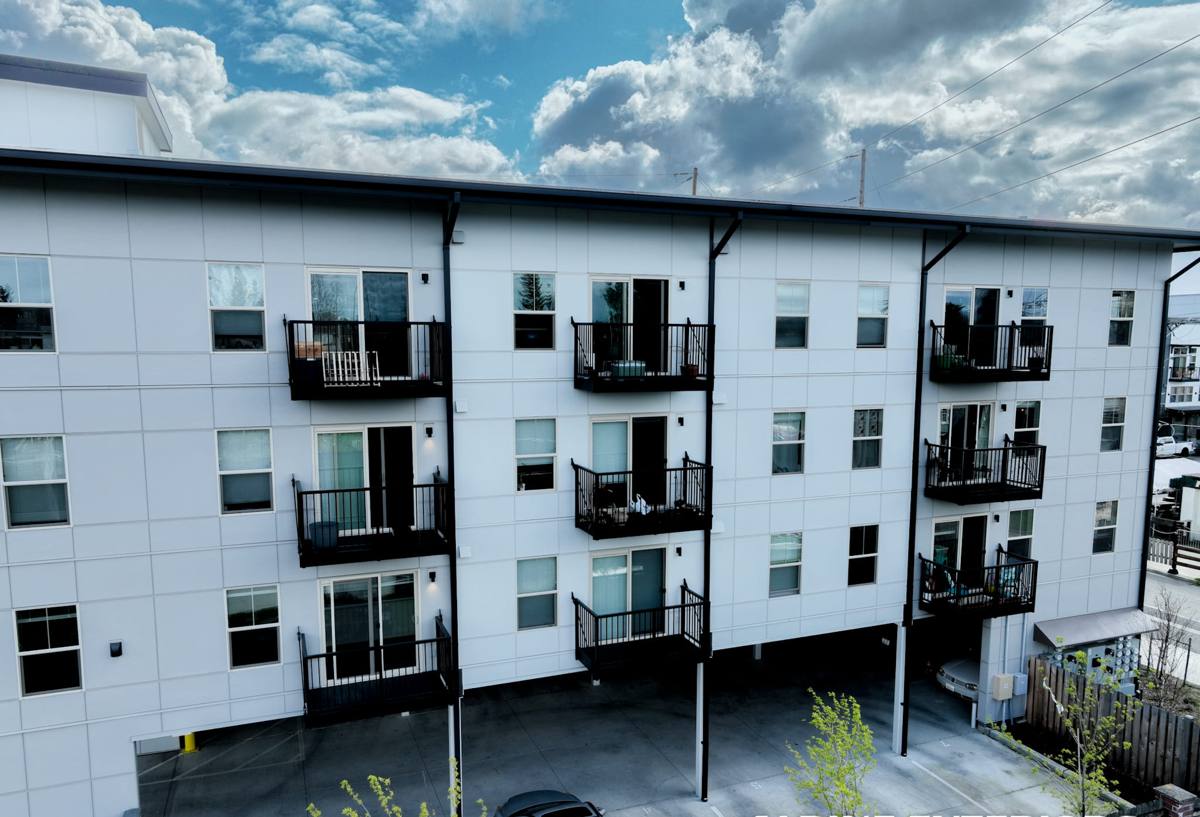
What South Hill's Climate and Terrain Do to Windows
Elevation and Wind Exposure
Homes higher up the hill, especially those with a clear line toward the bay, catch more direct wind than homes tucked into the flatter, more tree-sheltered parts of Bellingham. That wind pushes rain sideways into window openings rather than letting it fall straight down, which means flashing and seal quality matter more here than they would on a calmer site. A window that would perform fine on a sheltered lot can still leak on an exposed South Hill elevation if the installation doesn't account for that wind loading.
Marine Air and Hardware Corrosion
Bay-facing exposure carries salt-tinged air onto South Hill properties more consistently than it reaches homes further inland. Over years, that air is hard on lower-grade window hardware, fasteners, and frame components, showing up as pitted metal, hardware that's gotten stiff or hard to operate, and seals that fail earlier than they should. It's a slow kind of wear that's easy to miss until a window stops locking properly or starts drafting.
A Long Moss and Mildew Season
Mild, damp conditions across most of the calendar year give moss and mildew plenty of time to take hold on shaded sills, trim, and the wood framing around older windows. North-facing windows and anything tucked under an eave with poor drainage tend to show it first. On South Hill's older housing stock in particular, original wood-framed windows without cladding are especially exposed to this kind of sustained moisture.
Energy Loss Through Aging Frames
Older single-pane windows, or double-pane units with a failed seal, lose conditioned air at a rate that shows up directly on a heating bill. On a hillside site with more wind exposure than average, that loss is amplified, since wind pressure against the building envelope pushes harder on any gap or weak seal than still air would.
Signs a South Hill Home Needs Window Attention
- Fogging or visible moisture trapped between the panes of a double-pane window
- Noticeable drafts or cold spots near window frames, especially on bay-facing or upper-elevation windows
- Wood sills or trim that feel soft, look discolored, or show visible rot
- Hardware that's stiff, corroded, or harder to lock than it used to be
- Visible daylight or gaps where the frame meets the surrounding siding or trim
- A heating bill that's climbed without a clear explanation elsewhere in the home
What "Energy-Efficient" Actually Means for a Window Here
An energy-efficient window is really a combination of factors working together, not a single feature. For a South Hill home, the ones that matter most are a well-sealed, dimensionally stable frame, a glazing package suited to the Pacific Northwest's mild-but-damp climate, and an installation that ties the window into the wall assembly correctly so the seal the window is engineered to provide actually holds up on-site.
- Frame material: Vinyl and fiberglass frames resist rot and hold a tighter seal over time than uncladded wood, which matters on a site with this much sustained moisture.
- Glazing package: Double or triple-pane glass with a low-E coating cuts both heat loss in winter and unwanted solar gain in summer, and it reduces interior condensation on cold glass during damp stretches.
- Gas fill and spacer design: Argon or krypton fill between panes, paired with a warm-edge spacer, improves insulating performance and helps prevent the seal failure that shows up as fogging between panes.
- Hardware grade: Corrosion-resistant hardware holds up longer against South Hill's marine air exposure than standard-grade hardware does.
- Installation and flashing: Even the best glazing package underperforms if the window isn't flashed and sealed correctly into the surrounding wall — this is where most real-world energy loss actually happens.
Comparing Window Options for a South Hill Property
| Factor | Vinyl | Fiberglass |
|---|---|---|
| Upfront cost | Generally lower | Generally higher |
| Dimensional stability across temperature swings | Good, can expand/contract slightly more | Very stable, minimal movement |
| Color and paint flexibility | Limited, mostly factory colors | Can typically be painted if a custom color is wanted |
| Rot resistance in this climate | Strong | Strong |
| Long-term hardware and seal performance | Solid, especially with corrosion-resistant hardware upgrades | Solid, often paired with higher-end hardware as standard |
Neither option is the automatically "correct" one — the right call depends on budget, whether frame color matters to the homeowner, and which elevation of the house the window sits on. We walk through the real trade-offs on-site rather than steering every homeowner toward the same product.
Why Installation Quality Matters More Than the Brand Name
We talk to South Hill homeowners about flashing and installation detail as much as we talk about window products, because in this climate that's genuinely where performance is won or lost. A correctly installed mid-grade window that's properly flashed into the surrounding wall will hold up better and stay more energy-efficient over time than a premium window installed with sloppy flashing or caulk used as a substitute for it. Caulk breaks down and cracks; it was never designed to be the only barrier against wind-driven rain on an exposed hillside elevation.
What a Correct Installation Involves
Proper window installation means the flashing laps correctly with the house's weather-resistive barrier and siding, water is directed out and away from the rough opening rather than trapped behind it, and every seam gets sealed with materials rated for sustained moisture exposure. On South Hill specifically, we pay extra attention to bay-facing and upper-elevation windows, since those are the openings taking the most direct wind-driven rain.
Repair or Replace? How We Make the Call
Not every window on a South Hill property needs full replacement. A window with a failed seal but a sound frame and working hardware is often a reasonable repair or reglaze candidate. A window with rotted framing, corroded hardware that's beyond adjustment, or a history of leaking despite past sealing attempts usually isn't — at that point, continued patching tends to cost more over time than doing the replacement once, correctly.
- Fogged glass with a sound, intact frame: usually a repair or reglaze
- Stiff or corroded hardware on an otherwise solid window: usually a hardware replacement, not a full swap
- Soft or rotted wood framing: rarely a lasting repair, typically calls for replacement
- Persistent drafts that continue despite resealing: often points to a failed unit rather than a caulking fix
- Single-pane glass with no upgrade history: a reasonable case for replacement on energy grounds alone
How Windows Connect to the Rest of the Building Envelope
Window performance doesn't exist in isolation from the siding, trim, and drainage plane around it. A window replaced without attention to how it ties into the surrounding wall can look fine for a season or two and still leak, because water that gets past a poorly integrated window travels into the wall assembly instead of staying visible on the surface. We handle siding, roofing, windows, and decks, and on South Hill that matters in a practical way — the crew doing the window flashing understands how it needs to tie into the siding and trim details on a hillside home, rather than treating the window as a standalone product swap.
Our Process
We start with an on-site look at the existing windows, checking frame condition, seal integrity, hardware function, and how the current flashing ties into the siding around each opening, paying particular attention to which elevations of the home are catching the most wind and rain. From there we give a straightforward read on which windows are reasonable repair candidates and which make more sense to replace, along with a written scope before any work begins. Flashing and drainage detailing are handled as standard practice, not an upgrade homeowners have to request.
A Simple Checklist Before Hiring for Window Work on South Hill
- Ask specifically how they handle flashing integration with existing siding, not just which window brand they sell
- Confirm current Washington contractor licensing and active liability insurance
- Get a written scope that separates the manufacturer's product warranty from the contractor's installation warranty
- Ask whether they recommend repair or replacement for each window individually, and why
- Ask how they account for wind and rain exposure differences between elevations of the home, especially on a hillside lot
If you're dealing with drafty, foggy, or hard-to-operate windows on a South Hill property, or you just want an honest read on whether repair or replacement makes more sense, we're glad to take a look. Reach out using the form below for a free, no-pressure estimate.