 Bellingham Roofing
 South Hill's Siding Has a Harder Job Than Most
South Hill sits up on the elevated ground above downtown Bellingham, which means homes here catch weather that lower, more sheltered parts of Whatcom County don't get as directly. Wind off Bellingham Bay carries salt-laden moisture that settles on exterior walls, siding faces long stretches of driving rain that comes in sideways during fall and winter storms, and the shaded, damp conditions common on this side of town extend moss and algae season well beyond what homeowners in drier parts of the state ever have to think about. Add in the freeze-thaw cycles that show up most winters, and you've got a combination that punishes any siding material with a weak point.
None of that is unique to South Hill in the abstract — it's the story for most of coastal Whatcom County. But South Hill's elevation and exposure make the effects show up faster and more visibly, especially on north- and west-facing walls that stay damp longest after a storm. That's the backdrop for every siding decision on this hill: not just what looks good going up, but what's still doing its job in fifteen years.
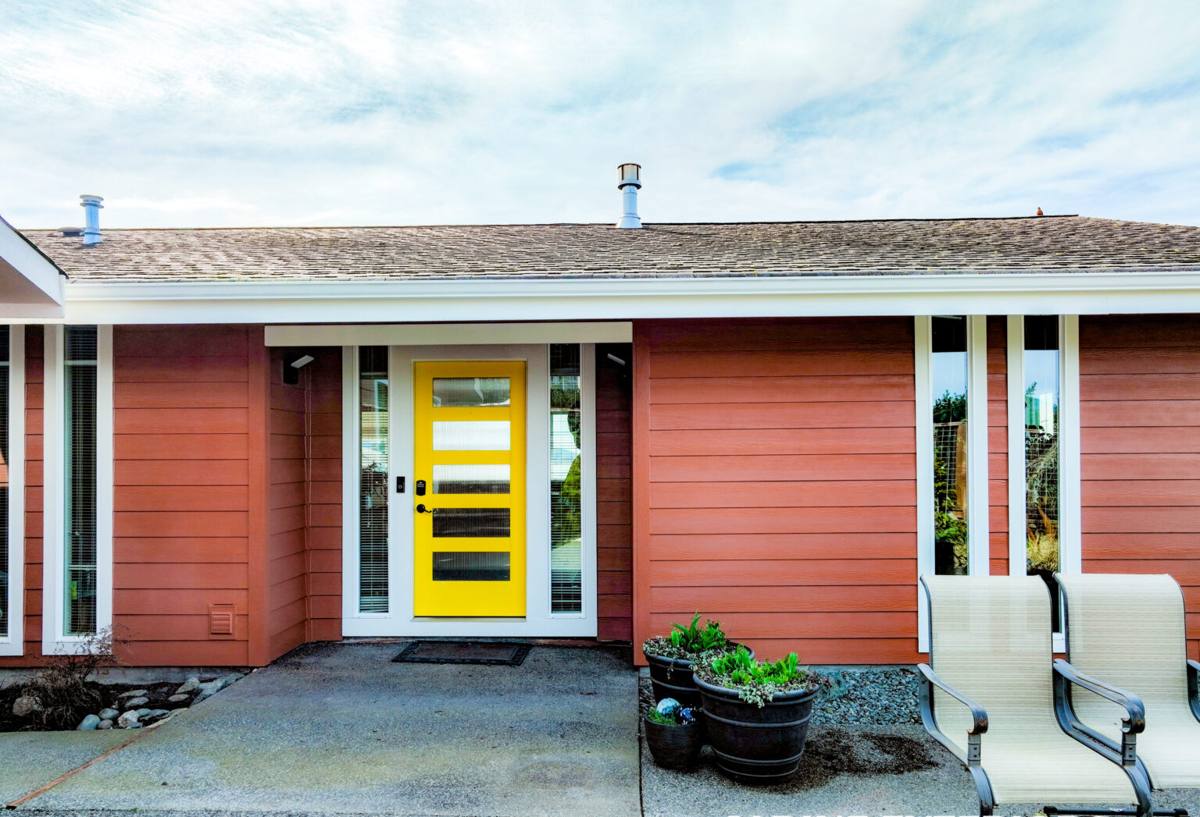
What James Hardie Siding Brings to a South Hill Home
James Hardie fiber cement siding is built from sand, cement, and cellulose fibers, engineered to hold its shape and resist moisture intrusion in ways that wood-based and vinyl products can't match. For this region specifically, Hardie's HardieZone system matters: Bellingham falls into the HZ5 climate designation, and Hardie engineers its products to handle the specific combination of moisture, temperature swings, and UV exposure found in zones like ours — not a generic national spec.
Three product qualities matter most for a house on South Hill:
- Non-combustible core. Fiber cement doesn't feed a fire the way wood-based siding can, which matters for insurance conversations and general peace of mind.
- Moisture-resistant composition. Properly installed, the material doesn't swell, delaminate, or rot the way engineered wood products can when they take on repeated wetting.
- ColorPlus factory finish. A baked-on, color-matched finish applied under controlled factory conditions holds up to UV and salt air significantly better than field-applied paint, and it means touch-up paint is formulated to match rather than guessed at.
We install James Hardie exclusively — not as one option among several, but as the only fiber cement siding system we put on a house. That's a deliberate standard, and we explain why later in this page.
Picking the Right Hardie Product Line for This House
James Hardie makes several distinct product lines, and the right one depends on the home's architecture, its exposure, and the look the homeowner wants. Matching the product to the wall — not defaulting to whatever's easiest to install — is part of doing the job correctly.
| Product Line | Best Use | Notes for South Hill Homes |
|---|---|---|
| HardiePlank Lap Siding | Traditional horizontal lap look | Most common choice; wide range of widths and textures, works on most architectural styles in the neighborhood |
| HardiePanel Vertical Siding | Modern, board-and-batten, or accent walls | Pairs well with lap siding for dimensional accents on gables or entry features |
| HardieShingle | Shingle-style or Craftsman detailing | Good option for homes with existing shingle accents or a cottage-style front |
| HardieTrim | Corner boards, fascia, window and door trim | Keeps trim material consistent with the siding's moisture performance, avoiding a mismatched wood-rot point |
On a house with heavy west or north exposure, we'll often recommend a smooth or lightly textured finish over a deep wood-grain texture, simply because smoother surfaces shed standing moisture and collect less organic debris — which matters directly for moss control.
Color and Finish Considerations
ColorPlus finishes come in a range of factory colors engineered for UV and weather resistance, which reduces how often the siding will need repainting compared to field-painted materials. In a climate with this much rain and low-angle winter light, a durable factory finish is less about aesthetics and more about not having to schedule repaint work every several years.
What a Correct Installation Actually Involves
Fiber cement siding is only as good as its installation. James Hardie's own installation guidelines are specific, and skipping steps is the single biggest reason siding fails early — not the material itself. For a South Hill home dealing with wind-driven rain, these details aren't optional extras:
- Proper clearances. Siding needs to sit above grade, roof lines, and decks by the manufacturer's specified minimums so water has somewhere to go instead of wicking into the bottom edge.
- Water-resistive barrier. A correctly lapped and taped weather barrier goes behind the siding as the actual moisture line of defense — the siding sheds the bulk of the water, but the barrier handles what gets past it.
- Flashing at every penetration. Windows, doors, hose bibs, vents, and any other wall penetration need proper flashing details so wind-driven rain can't find a path behind the cladding.
- Correct fastening. Nail placement, spacing, and depth follow Hardie's spec exactly — overdriven or misplaced fasteners are a common cause of cracking and premature wear.
- Sealed and caulked joints, done right. Butt joints, trim intersections, and penetrations get sealed with products compatible with the ColorPlus finish, not just whatever caulk is on the truck.
This level of detail is exactly why we don't treat fiber cement installation as interchangeable with vinyl or lap-and-nail wood siding work. It's a different system with different rules, and those rules exist because of exactly the weather South Hill sees.
How Our Process Works
1. On-Site Assessment
We start by walking the exterior, checking existing siding condition, looking at moisture damage around windows and the foundation line, and assessing which walls take the heaviest weather exposure. This tells us where extra flashing attention or product changes make sense before we ever price the job.
2. Removal and Substrate Check
Old siding comes off, and we inspect the sheathing underneath for rot or moisture damage before anything new goes up. Covering a compromised substrate with new siding just hides a problem — we address it first.
3. Weather Barrier and Flashing
A new water-resistive barrier goes on correctly lapped, and flashing gets installed at every window, door, and penetration before the first piece of Hardie siding is hung.
4. Installation to Manufacturer Spec
Siding goes up following James Hardie's fastening, clearance, and joint-sealing specifications — not shortcuts that speed up the job but compromise how it performs over the next fifteen or twenty years of Bellingham winters.
5. Final Walkthrough
We walk the finished exterior with the homeowner, checking trim lines, caulking, and touch-up work before calling the job complete.
Living With Hardie Siding in a Moss-Prone, Salty Climate
Even the right material benefits from basic upkeep, especially given South Hill's shaded pockets and moisture-heavy air. None of this is difficult, but it's worth doing on a schedule rather than only when problems become visible.
- Rinse siding down once or twice a year with a garden hose to clear salt residue and loose debris — avoid high-pressure washing, which can force water behind joints.
- Trim back vegetation and tree limbs that keep siding shaded and damp, since prolonged shade is what drives moss and algae growth.
- Check caulking at trim and penetrations annually, since UV and freeze-thaw cycles can dry out or crack sealant over time.
- Watch gutter and downspout function closely — overflowing gutters are one of the most common causes of localized siding damage on hillside homes.
- Address any small paint chips or gouges early with matched touch-up product rather than letting bare fiber cement sit exposed.
Why We Only Install James Hardie
We get asked why we don't offer vinyl, LP SmartSide, or cedar as options. It comes down to what we've seen hold up — and not hold up — in this specific climate.
Vinyl siding is affordable and low-maintenance in the short term, but it's a thin material that can warp in heat, crack in cold, and it doesn't offer the impact resistance or fire performance of fiber cement. Engineered wood products like LP SmartSide perform well when installation and maintenance are perfect, but they're wood-based at the core, which means they're more sensitive to the kind of sustained moisture exposure a marine climate delivers if any detail — caulking, flashing, paint — falls behind. Cedar and primed spruce are honest, attractive materials, but they require an ongoing maintenance commitment — refinishing, sealing, moisture monitoring — that most homeowners underestimate going in, and in a climate with this much annual rainfall, that maintenance window closes fast if it's skipped even one season.
James Hardie's fiber cement composition, backed by a strong transferable warranty and a factory finish engineered for climates like ours, gave us a product we could stand behind without hedging. That's the whole reason we standardized on one manufacturer instead of offering a menu of options with different risk profiles.
What Affects the Cost of a South Hill Siding Project
| Factor | Why It Matters |
|---|---|
| Home size and wall complexity | More square footage, more corners, gables, and dormers mean more material and labor |
| Substrate condition | Rot or moisture damage found during tear-off adds repair scope before new siding goes up |
| Product line selection | Lap, panel, shingle, and trim products carry different material costs |
| Site access | Steep lots, limited driveway access, and tight setbacks common on hillside properties can affect staging and labor time |
| Trim and detail work | Extensive HardieTrim use around windows, corners, and rooflines adds finish-level labor |
We give a firm, itemized estimate after the on-site assessment rather than a ballpark over the phone, since two homes of the same square footage can have very different scopes once substrate condition and access come into play.
Why a Crew That Already Works South Hill Matters
Hillside neighborhoods like South Hill come with practical realities that don't show up on a spec sheet — steep driveways, tight lot lines, mature landscaping close to the house, and homes built across several different eras of construction practice. A crew that's already worked this part of Bellingham knows how to stage material efficiently on a sloped lot, recognizes older sheathing and flashing patterns common to the area's housing stock, and understands which walls on a given block orientation take the worst of the winter weather. That local pattern recognition shortens the assessment phase and reduces surprises once tear-off starts.
It also means we're working under the same building department and permitting expectations every time, with a track record of exterior work specific to Whatcom County's coastal conditions rather than general regional experience.
If your South Hill home needs new siding or you're weighing whether Hardie is the right move, we're happy to walk the exterior with you and give a straight, no-pressure estimate — fill out the form below to get started.