 Bellingham Roofing
 Storm Damage Roof Repair, Built for Sunnyland's Weather
Sunnyland sits close enough to Bellingham Bay to catch salt-laden air off the water, and like the rest of Whatcom County, it takes the full brunt of driving rain, wind gusts off the Salish Sea, and a moss season that can run most of the year. None of that is unusual for a Bellingham neighborhood — but it does mean storm damage here doesn't always look dramatic. A roof can take a real hit and still look fine from the ground, right up until a slow leak shows up on a ceiling weeks later.
We work storm damage repair calls in Sunnyland regularly, which means we already know the roof types common to the neighborhood's mix of older single-family homes and newer infill, and we know what our local storms actually do to shingles, flashing, and underlayment versus what's just normal wear from years of Pacific Northwest weather.
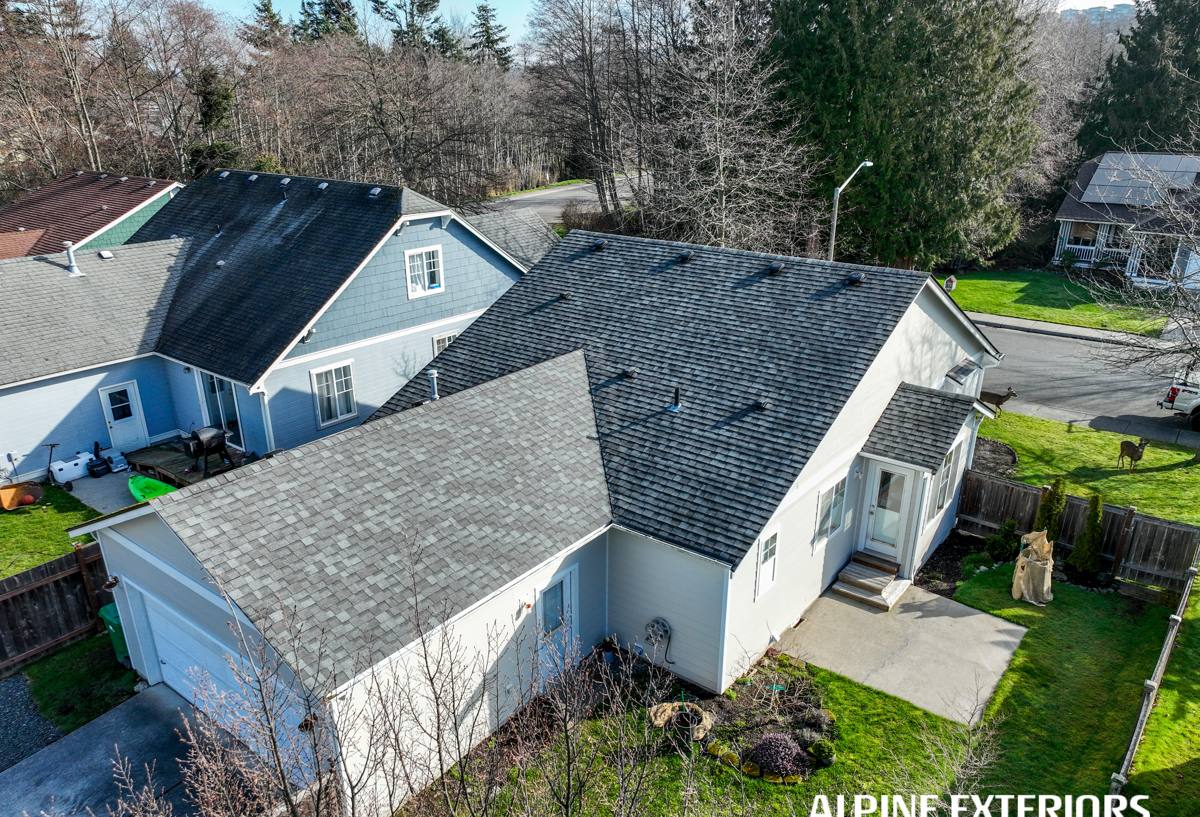
What Storm Damage Actually Looks Like Here
Whatcom County storms are rarely the kind that rip a roof apart in one dramatic event. More often it's cumulative — a wind event loosens a few shingle tabs, the next heavy rain finds that weak spot, and moss that's been building in the shaded, tree-lined parts of the neighborhood holds moisture against the deck long enough to start rot underneath. By the time a stain appears on drywall, the damage has usually been developing for a while.
Common storm damage we find on Sunnyland roofs
- Wind-lifted or torn shingle tabs, especially on roof edges and ridge lines where uplift is strongest
- Flashing pulled loose or bent around chimneys, skylights, and where roof planes meet walls
- Gutters pulled away from fascia by wind-driven debris or ice, causing water to dump against the roofline instead of draining
- Bruised or cracked shingles from wind-thrown branches, common on lots with mature tree canopy
- Soft or spongy decking under moss mats that trapped moisture through the wet season
- Nail pops and lifted fasteners after freeze-thaw cycles during colder snaps
Why Fast, Correct Repair Matters More Here Than Elsewhere
In a drier climate, a small gap in the roof might sit for months without consequence. In Bellingham, it won't. Whatcom County gets rain across most of the year, so an opening that lets water in during one storm is an opening that keeps letting water in until it's fixed — and each additional rain event pushes moisture further into insulation, framing, and drywall. What starts as a repair confined to a few shingles and some flashing can turn into a sheathing replacement if it sits through even one more wet stretch.
Salt air compounds this. It accelerates corrosion on exposed fasteners, flashing, and gutter hardware, so storm-damaged metal components in Sunnyland tend to fail faster than the same damage would in an inland town. That's part of why we don't treat storm repairs as a patch-and-forget job — we look at what the storm exposed and what the salt air and rain will do to that exposure if it's left alone.
Storm Damage vs. Ordinary Wear: How We Tell the Difference
Homeowners often ask us to confirm whether something is actually storm-related, especially when they're deciding whether to file an insurance claim. Here's roughly how we sort it out during an inspection:
| Sign | More Likely Storm Damage | More Likely Age/Wear |
|---|---|---|
| Missing shingles | Clean tear lines, torn nails, damage concentrated on the windward side | Curling, granule loss, and brittleness spread evenly across the roof |
| Leaks | Appeared suddenly after a specific wind or rain event | Slow, gradual staining that's grown over multiple seasons |
| Flashing issues | Bent, dislodged, or separated from the roof plane | Sealant simply dried out and cracked with age |
| Gutter damage | Pulled fasteners, dents from debris impact | Sagging from years of leaf and moss buildup |
| Deck softness | Localized under a specific tree-strike or ponding point | Widespread softness tied to an aging roof system nearing end of life |
This distinction matters for your insurance claim as much as for the repair plan — carriers want to see that damage is tied to a weather event, not general deterioration, so an honest, well-documented inspection protects you either way.
How We Handle a Storm Damage Call in Sunnyland
1. Fast response and stabilization
If your roof has an active leak or exposed decking, our first priority is getting it dry and protected — proper tarping tied down correctly, not just draped over the damage, so it survives the next round of wind and rain while a full repair is scheduled.
2. Full roof inspection, not just the obvious spot
Storms rarely damage just one area. We check the whole roof plane, valleys, penetrations, and gutter lines, because the visible damage that prompted your call is often not the only weak point the storm created.
3. Clear documentation
We photograph and note what we find and explain plainly what's storm-related versus pre-existing. If you're filing a claim, this documentation is what your adjuster needs to see.
4. Repair matched to your existing roof
We match shingle type, color, and exposure as closely as possible so a repair doesn't stand out as a patch, and we rebuild flashing details correctly rather than just resealing over old, failed material.
5. Cleanup and a final walkthrough
Debris, old nails, and torn material get cleared from the roof and gutters — leftover debris is exactly what starts the next moss mat or clogged drain.
Materials and Methods That Hold Up in This Climate
Storm repair in a coastal, wet climate isn't just about replacing what broke — it's about not creating the next failure point. On Sunnyland roofs we pay particular attention to:
- Corrosion-resistant fasteners and flashing where salt air exposure is a factor, since standard hardware degrades faster this close to the bay
- Proper flashing laps and step flashing at walls and chimneys rather than relying on sealant alone, which dries out and fails under repeated rain cycles
- Underlayment condition — if a storm exposed underlayment, we check its state before closing the roof back up rather than assuming it's fine
- Ventilation around the repaired area, since trapped moisture under a patch is how a small storm repair turns into a rot problem
We're selective about product choices for storm repairs specifically because of how this climate treats them over time — it's less about brand preference and more about which materials and installation details actually hold up to years of driving rain and salt exposure without ongoing maintenance headaches.
Repair or Replace? What Actually Drives That Decision
Not every storm-damaged roof needs full replacement, and not every roof is worth repairing indefinitely. The honest answer depends on a few factors we walk through with you rather than defaulting to the most expensive option.
| Factor | Leans Toward Repair | Leans Toward Replacement |
|---|---|---|
| Roof age | Under 12–15 years, otherwise in good condition | Nearing or past typical service life for its material |
| Extent of damage | Isolated to one section or slope | Spread across multiple planes or repeated storm events |
| Decking condition | Solid, no rot found during inspection | Soft or delaminated decking discovered under damaged shingles |
| Moss/moisture history | Minimal prior moss buildup | Long-term moss coverage with signs of trapped moisture |
| Insurance coverage | Claim covers targeted repair scope | Adjuster scopes full slope or full roof replacement |
We'll always give you our honest read on which side of that line your roof falls on, including when a repair is genuinely the right call and replacement isn't necessary yet.
Insurance Claims: What We Can Do to Help
Many storm damage repairs in Whatcom County go through homeowners insurance. We're not your insurance adjuster and won't pretend to be, but we can provide the kind of clear, photo-documented inspection report that makes the claims process go smoother — showing exactly what the storm damaged, how it's connected to a specific weather event, and what proper repair requires. That documentation is often the difference between a claim that gets approved quickly and one that gets pushback.
After the Storm: A Quick Homeowner Checklist
Before you call anyone, here's what's worth checking from the ground (never climb onto a wet or storm-damaged roof yourself):
- Shingle pieces, granules, or flashing pieces in the yard or gutters
- Visible gaps, curled edges, or missing shingles from the ground or a neighbor's upstairs window
- New water stains on ceilings or upper interior walls
- Gutters pulled away from the roofline or sagging under debris
- Fresh branch damage or debris sitting directly on the roof
- Any musty smell in the attic, which can indicate moisture intrusion before it's visible elsewhere
If you see any of these, it's worth a professional look before the next storm rolls through — waiting through one more wet system is usually what turns a manageable repair into a bigger one.
Why Hire a Crew That Already Works in Sunnyland
Storm damage repair goes better when the crew showing up already understands the neighborhood — the roof styles common to Sunnyland's mix of older and newer homes, how close you are to salt air off the bay, and how the local tree canopy affects moss buildup and debris. That familiarity means fewer surprises during the inspection and repair recommendations that reflect what actually holds up here, not generic advice pulled from a different climate.
If a recent storm has you wondering whether your roof took a hit, we're glad to take a look, walk you through exactly what we find, and give you a straight answer — no pressure, no upsell. Reach out below for a free estimate.