 Bellingham Roofing
 Why Sudden Valley Roofs Wear Differently
Sudden Valley sits back in the trees along Lake Whatcom, southeast of Bellingham, and that setting is part of what makes it a great place to live — and part of what makes roofing here more demanding than a standard job across town. Most lots are heavily wooded, many homes sit in partial shade most of the day, and a good number of roofs are tucked behind a private, gated network of narrow roads and shared driveways. All of that shapes how a roof ages, and it shapes what we plan for before we ever climb up.
Zoom out and the broader Whatcom County climate adds its own pressure: long stretches of driving rain off the Pacific, humid air carrying a trace of salt in from Bellingham Bay and the Sound, and short winter days that don't give a wet roof much chance to dry out between storms. Layer that regional pattern on top of Sudden Valley's tree cover and lake-effect moisture, and you get a genuinely long moss season — often longer than what homeowners see on more open, sun-exposed lots closer to the water.
Tree Cover and Moss
Overhanging branches do two things to a roof: they drop needles, cones, and leaf litter into valleys and gutters, and they block the sun that would otherwise dry the shingles out after a storm. Shade plus organic debris plus moisture is exactly the recipe moss and algae need. On a Sudden Valley roof, north-facing slopes and anything under a tree canopy will almost always show moss and dark streaking well before the rest of the roof does.
Wind-Driven Rain and Steep, Sloped Lots
Many Sudden Valley properties are built on sloped ground, which often means steeper roof pitches, more valleys, and more complicated rooflines than a flat-lot subdivision roof. Steeper, more complex roofs have more seams — valleys, hips, dormers, skylights — and every seam is a place where wind-driven rain can find a way in if the underlayment and flashing aren't done right. This is a climate where "close enough" flashing work shows up as a leak within a season or two, not years down the road.
What a Shingle Roof Needs to Do Here
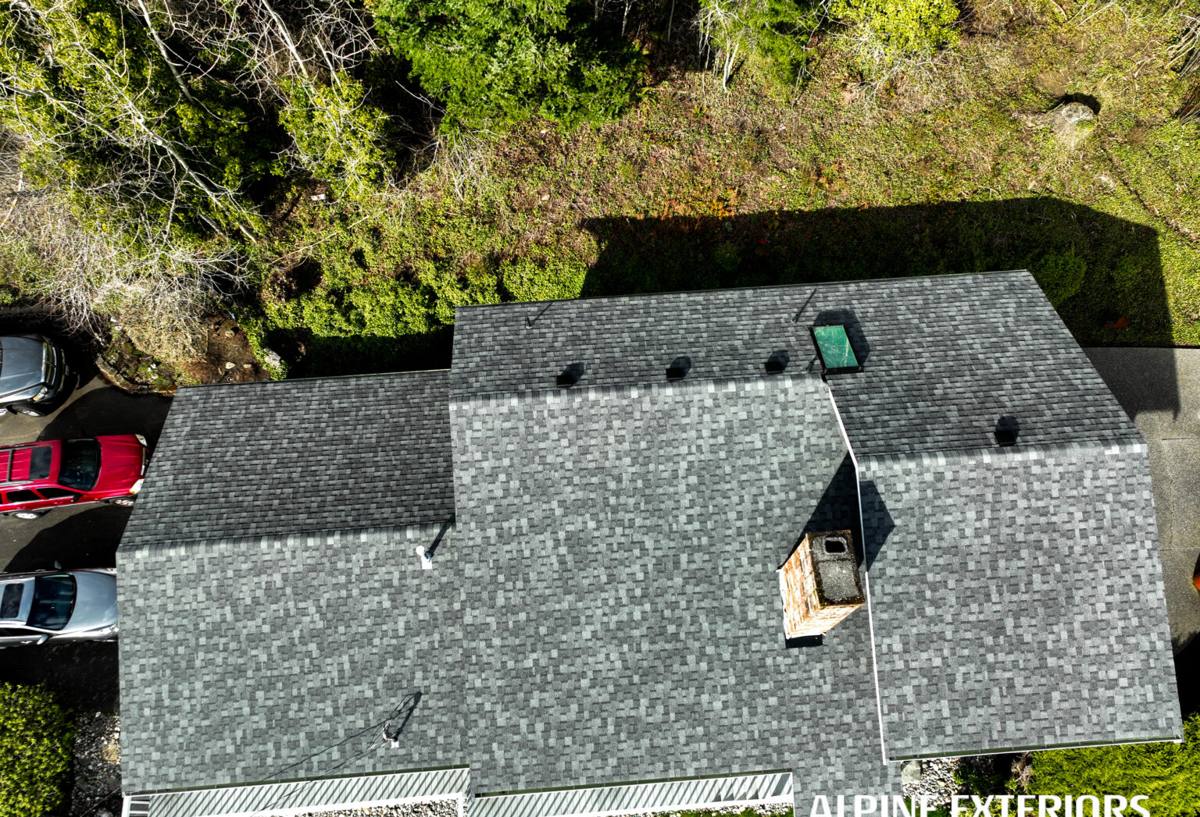
An asphalt shingle roof in Sudden Valley has three jobs, and they're not all equally obvious. It needs to shed water fast during heavy rain events. It needs to resist algae and moss growth in shaded, damp conditions for years, not months. And it needs enough attic and roof ventilation to let moisture escape from the inside, so the shingles aren't fighting damp air from both directions. Miss any one of those three and the roof will underperform its rated lifespan, no matter how good the shingle itself is.
This is also why we don't treat "asphalt shingle roofing" as a one-size-fits-all product. The shingle matters, but on a shaded, wooded lot the underlayment, ventilation, and flashing details matter just as much — sometimes more.
Shingle Options and Trade-Offs
There's no single "best" shingle for every Sudden Valley home — it depends on your budget, how much shade your roof sits in, and how long you plan to stay in the house. Here's how the common tiers stack up for this climate specifically:
| Shingle Type | Typical Lifespan | Moss/Algae Resistance | Best Fit |
|---|---|---|---|
| 3-tab (standard) | Shorter end of the range | Lower unless algae-resistant (AR) rated | Budget-conscious jobs on sunnier, less-shaded roofs |
| Architectural / laminate | Mid to upper range | Good with AR granules; the common choice here | Most Sudden Valley homes, especially shaded lots |
| Premium / designer laminate | Upper range | Strong AR performance, heavier mat | Steep, highly visible, or complex rooflines |
For most Sudden Valley homes, we lean toward a mid-to-premium architectural shingle with algae-resistant granules, simply because the extra moss resistance earns its keep on a shaded lot faster than it would on an open one. On roofs with a lot of morning sun and less overhang, a well-installed standard shingle can still make sense — it's a real trade-off, not a marketing decision.
What a Correct Installation Actually Involves
The shingle brand on the wrapper is the least important decision in a roof that's going to sit under trees for the next couple of decades. What actually determines how it performs is what happens underneath and around it.
Underlayment and Ice-and-Water Protection
We run synthetic underlayment across the full deck for tear resistance and water shedding, and we install self-adhering ice-and-water membrane at eaves, valleys, and around every penetration — chimneys, skylights, plumbing vents. In a climate with this much sustained rainfall, valleys are the single most common leak point on an under-protected roof, and they're the cheapest thing to get right at install time.
Ventilation
Balanced intake and exhaust ventilation keeps the underside of the deck dry and keeps attic moisture from condensing under the shingles. On shaded, damp lots like many in Sudden Valley, poor ventilation shortens shingle life and can lead to sheathing rot that never shows up until it's a significant repair.
Flashing Details That Matter in Wet Climates
Step flashing at walls and chimneys, proper counterflashing, and correctly lapped valley metal or woven valleys are what actually stop wind-driven rain. We don't rely on roofing cement as a substitute for flashing that's cut and installed correctly — cement is a short-term patch, not a long-term seal, and in a climate this wet it fails faster than most homeowners expect.
Nailing and Sealant Strip Activation
Shingles are rated assuming correct nail placement and count. Under-nailing or high-nailing is a common shortcut that doesn't show up as a problem until the first real windstorm off the lake peels shingles that should have held. We also make sure sealant strips get real sun exposure to bond — on the shadiest lots, that can take longer, and we account for it rather than assuming it happened.
Maintenance That Actually Extends Roof Life Here
A well-installed shingle roof in Sudden Valley still needs more upkeep than the same roof would need on a sunny, open lot. Skipping maintenance here doesn't just risk moss — it risks trapped moisture under debris that rots the deck underneath the shingles.
- Clear needles, leaves, and cones out of valleys and gutters at least twice a year, more often under heavy conifer cover
- Treat moss and algae growth before it thickens — a light, established growth is a maintenance job; a thick mat is a shingle-damage problem
- Trim back overhanging branches to cut down on debris and let more sun and air reach the roof surface
- Check attic ventilation isn't blocked by insulation, debris, or nesting animals
- Have flashing around chimneys, skylights, and vents inspected after any major windstorm
- Don't pressure-wash shingles — it strips granules and shortens the roof's life faster than the moss it's removing
Our Process for Sudden Valley Jobs
Working in Sudden Valley comes with a few practical wrinkles we plan around rather than treat as surprises. Many properties are inside a private community with its own roads and access rules, so we coordinate timing and site access ahead of a job rather than showing up cold. Tree cover often means limited staging space and more hand-carrying of material where a crane or lift truck can't get close, which we account for in scheduling and crew size.
On the inspection side, we look past the shingle surface to the parts that actually predict how the roof will perform: deck condition, existing ventilation, valley and flashing condition, and how much shade and debris load the roof deals with year-round. That inspection is what a fair, accurate estimate is built on — not a guess based on square footage alone. We also plan installation timing around the wetter stretches of the Whatcom County calendar where we can, since a shingle roof needs a reasonably dry deck to go on correctly.
Signs Your Sudden Valley Roof Needs Attention
Because shade and debris accelerate wear here, problems often show up earlier than a homeowner expects for the roof's age. Worth a call if you're seeing any of the following:
- Moss or dark algae streaking on north-facing or heavily shaded slopes
- Granules collecting in gutters or at downspout outlets
- Curling, cupping, or cracked shingles, especially on older sun-exposed sections
- Soft or spongy spots on the roof deck when walked, or sagging between rafters
- Water stains on interior ceilings near valleys, chimneys, or skylights after a heavy rain
- Daylight visible through the attic roof deck
Catching these early is almost always cheaper than waiting — a moss problem is a maintenance visit, while a moss problem left for a few more wet seasons can become a deck repair.
Why Local Experience with Sudden Valley Matters
A roofing crew that's never worked a heavily wooded, sloped Whatcom County lot will size up a Sudden Valley job the same way they'd size up a flat, open roof in town — and that shows up later as underestimated moss resistance, undersized ventilation, or flashing that wasn't built for this much sustained rain. Working this neighborhood regularly means we already know what these lots throw at a roof: the shade patterns, the debris load, the access constraints, and the parts of the roof that fail first when they're not built for it. That's not a substitute for a careful inspection of your specific roof, but it does mean fewer surprises once the job starts.
If your roof is showing moss, aging shingles, or you just want an honest read on how many years it has left, we're happy to take a look. Reach out for a free, no-pressure estimate using the form below — we'll walk the roof, tell you what we actually see, and give you a straight answer either way.