 Bellingham Roofing
 Window Installation Built for How South Hill Actually Weathers
South Hill sits up above downtown Bellingham with some of the best views in Whatcom County — and along with those views comes direct exposure to weather rolling in off Bellingham Bay. Homes here take on salt-laden air, wind-driven rain that hits windows sideways rather than straight down, and long stretches of gray, damp months where moss and algae get a running start on anything that stays wet. Window installation in this neighborhood isn't just about picking a style and popping in a new unit. It's about understanding how each opening in a wall behaves under sustained moisture pressure, year after year, and building the installation so water has nowhere to go but back outside.
A lot of window problems we get called out to look at in this area didn't start as window problems at all — they started as installation shortcuts. The window itself was fine. The flashing, sealing, or framing around it wasn't built for the exposure the wall actually gets. That's the gap this page is about closing.
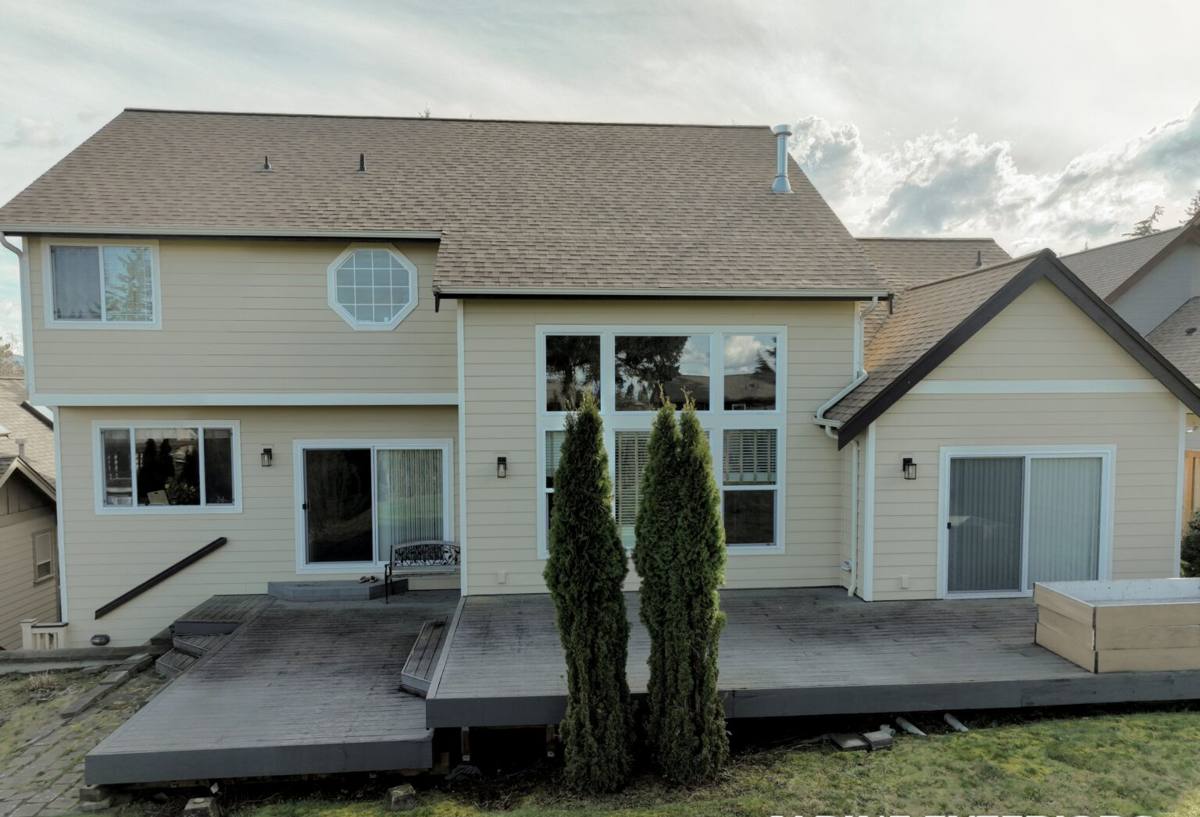
The Climate Factors That Drive Every Decision Here
Salt Air and Metal Fatigue
Proximity to the bay means a steady, low-level presence of salt in the air, especially on west- and north-facing walls that catch weather directly. Salt air accelerates corrosion on window hardware, fasteners, and any exposed metal flashing that isn't rated for coastal exposure. Over years, this is what causes stiff cranks, pitted hinges, and streaking below sills on homes that otherwise look well maintained.
Driving Rain, Not Just Rainfall Totals
Whatcom County doesn't just get a lot of rain — a good portion of it arrives horizontally during winter storm systems. That matters for window installation because it changes where water pressure concentrates. A sill or head flashing detail that would be adequate in a calmer climate can fail here simply because wind is forcing water up and under trim, not just down the face of the wall.
Moss Season and Sustained Dampness
Bellingham's long wet season keeps north-facing and shaded walls damp for weeks at a time, which is exactly the environment moss and algae need to establish. Once organic growth gets a foothold around a window's trim or sill, it holds moisture against the wood or cladding far longer than rain alone would, which is a direct path to rot if the underlying materials and sealing weren't done right.
What Correct Window Installation Actually Involves
"Correct" isn't a marketing word here — it's a specific sequence of steps that either happens or doesn't. Skipping any one of these is how a brand-new window ends up leaking within a few winters.
- Removing the old unit without damaging the surrounding framing, and inspecting that framing for hidden rot before anything new goes in
- Correcting any soft or water-damaged framing found during removal — never installing a new window over a compromised opening
- Installing a sloped sill pan so any water that gets past the window has a built-in path back outside instead of sitting against the sill
- Applying flashing tape and housewrap integration in the correct shingle-lap order — top layer overlapping the one below it, every time, no exceptions
- Setting the window level, plumb, and square, then securing it per the manufacturer's fastening schedule so the frame doesn't rack under wind load
- Sealing the interior air barrier separately from the exterior water barrier — these are two different jobs with two different materials
- Insulating the gap around the frame properly, without overpacking it in a way that bows the frame inward
- Finishing exterior trim and caulking with products rated for the temperature and moisture swings this climate produces
Every one of these steps is invisible once the trim goes back on. That's exactly why the crew doing the work — and their habits when nobody's double-checking — matters more than almost anything else in the project.
What We Commonly Find in South Hill Homes
South Hill has a good mix of older, established homes alongside newer construction, and the window issues we see tend to split along those lines. In older homes, original single-pane or early dual-pane windows have often been in place for decades, with wood frames that have absorbed moisture cycle after cycle. By the time a homeowner calls, there's frequently soft framing behind the trim that isn't visible from inside the house. In newer homes, the more common issue is a window that was installed quickly during original construction, with flashing details that were adequate to pass inspection but not built for the specific exposure of that wall.
Either way, the fix is the same principle: don't just replace the glass and frame, address what's behind it. A new window installed into a wall that wasn't properly prepped will show the same symptoms as the old one, just on a longer delay.
Choosing Materials That Make Sense for This Exposure
There's no single "best" window material — the right choice depends on which wall it's going in, how much direct weather that wall gets, and what the homeowner wants to maintain over time. We walk through these tradeoffs honestly rather than pushing one option for every opening.
| Frame Material | How It Handles This Climate | Maintenance Reality |
|---|---|---|
| Vinyl | Won't rot or corrode from salt air; handles moisture well | Low maintenance, but quality varies a lot between manufacturers |
| Fiberglass | Very stable in temperature swings, strong resistance to moisture and salt exposure | Low maintenance, higher upfront cost, holds paint well if color changes later |
| Wood | Best appearance for older or historic-style homes, but most vulnerable to sustained dampness and moss contact | Requires regular repainting or sealing to keep water out long-term |
| Wood-clad (wood interior, metal or vinyl exterior) | Good compromise — protected exterior face with traditional wood interior look | Moderate; exterior cladding needs to be inspected where it meets the sill |
For homes on more exposed sides of South Hill — especially anything facing the bay directly — we generally steer homeowners toward vinyl or fiberglass on those elevations, and reserve solid wood frames for more sheltered walls where they'll actually hold up without constant upkeep. This is a maintenance and moisture-behavior recommendation, not a statement that wood windows are a bad product — they're simply a higher-commitment choice in this specific climate.
Glass Matters as Much as the Frame
Dual-pane, low-E glass is the practical standard for this region — it manages both heat loss in winter and glare/heat gain in the brighter summer months, and the insulated gap between panes helps cut down on the condensation that shows up on single-pane windows during cold, damp mornings. Triple-pane is worth discussing for north-facing rooms or homes especially exposed to wind, but it's a real cost increase that doesn't make sense for every wall.
Our Installation Process
- On-site assessment. We look at each window opening individually — sun exposure, wind exposure, and condition of the existing framing — rather than quoting a blanket price for "the house."
- Material and product recommendation. Based on that assessment, we recommend frame material and glass package per opening, explaining the tradeoffs rather than just upselling the most expensive option.
- Removal and framing inspection. Old units come out carefully, and we inspect and repair any framing damage before the new window goes anywhere near the opening.
- Sill pan, flashing, and air-seal installation. This is the step that determines whether the window performs for one winter or twenty.
- Window setting and fastening. Leveled, squared, and fastened to manufacturer spec — not just wedged into place and trimmed over.
- Exterior finish work. Trim, caulking, and paint or stain matched to the rest of the home's exterior.
- Walkthrough. We show the homeowner the finished operation of every window — locks, cranks or sashes, and screens — before calling the job done.
Why It Matters That We Already Work in South Hill
A crew that installs windows all over Whatcom County without a specific read on a neighborhood's exposure will apply the same generic approach everywhere. A crew that regularly works South Hill's mix of older homes, hillside lots, and bay-facing exposure knows which walls typically need extra attention to flashing, which framing issues show up most often in homes of a certain age, and how the local permitting and inspection process actually runs — not in theory, but from having done it. That local pattern-recognition is what keeps a window installation from becoming a callback two winters later.
What Affects the Cost of a Window Installation Project
| Factor | Why It Moves the Price |
|---|---|
| Full-frame vs. insert replacement | Full-frame replacement (removing down to the rough opening) costs more but is often required when framing damage is found |
| Frame material | Vinyl is typically the most budget-friendly; fiberglass and wood-clad cost more upfront |
| Number and size of openings | Larger picture windows and multi-window bays take more labor and materials than standard single units |
| Existing damage found during removal | Rotted framing or sheathing discovered mid-project needs to be repaired before the new window can be set correctly |
| Wall exposure | Bay-facing or heavily weathered walls may need upgraded flashing details, which adds labor time |
We give straightforward, itemized estimates so homeowners can see exactly what's driving the number — not a single lump figure with no explanation behind it.
Keeping New Windows Performing After Installation
A correctly installed window still benefits from basic seasonal attention, especially given how much moss and moisture South Hill deals with over the wet months.
- Rinse pollen, salt residue, and grime off glass and frames a few times a year, especially after storms off the bay
- Check exterior caulk lines annually for cracking or separation, particularly on south- and west-facing units
- Clear moss or organic buildup off sills and trim promptly — don't let it sit against the frame
- Make sure gutters and downspouts near window openings are clear so runoff isn't sheeting directly across the glass or sill
- Test locks, cranks, and hardware each fall before the wet season sets in, since salt air is what typically stiffens these first
Ready to Talk About Your Windows?
If you're dealing with drafty, foggy, or hard-to-operate windows on a South Hill home — or you're just planning ahead before the next wet season — we're happy to come take a look. We'll give you a straightforward, no-pressure estimate based on what your specific windows and walls actually need, not a generic package. Use the form below to get started.